- Creative
The Art of the Shot: Matthew Murphy
May 20, 2026
•
Broadway’s Best Shows sat down with Photographer Matthew Murphy to discuss his work with MurphyMade, the leading photography shop for theatrical photography.
Cover photo of Matthew by Ethan Carlson.

You started as a dancer… what was the moment you realized your path was actually behind the camera, not on stage?
I was fortunate enough to follow my first dream of becoming a professional dancer when I joined American Ballet Theatre in 2003. I spent a fabulous 5 years there, but when I was 22 I retired the tights and picked up a DSLR when I was recovering from Epstein Barr Virus. It was during that time that I really started to photograph a lot of dance—both during rehearsals at ABT and in downtown dance performances of friends’. While I always loved dancing, it quickly became apparent to me that photography allowed me a freedom and variety to my artistic experience that had been lacking in my ballet career. I was fortunate that a lot of opportunities fell into place quickly due to my dance world connections. But it was when I got hired as a freelancer for the Arts section of The NY Times that I really felt this could be a viable career path.
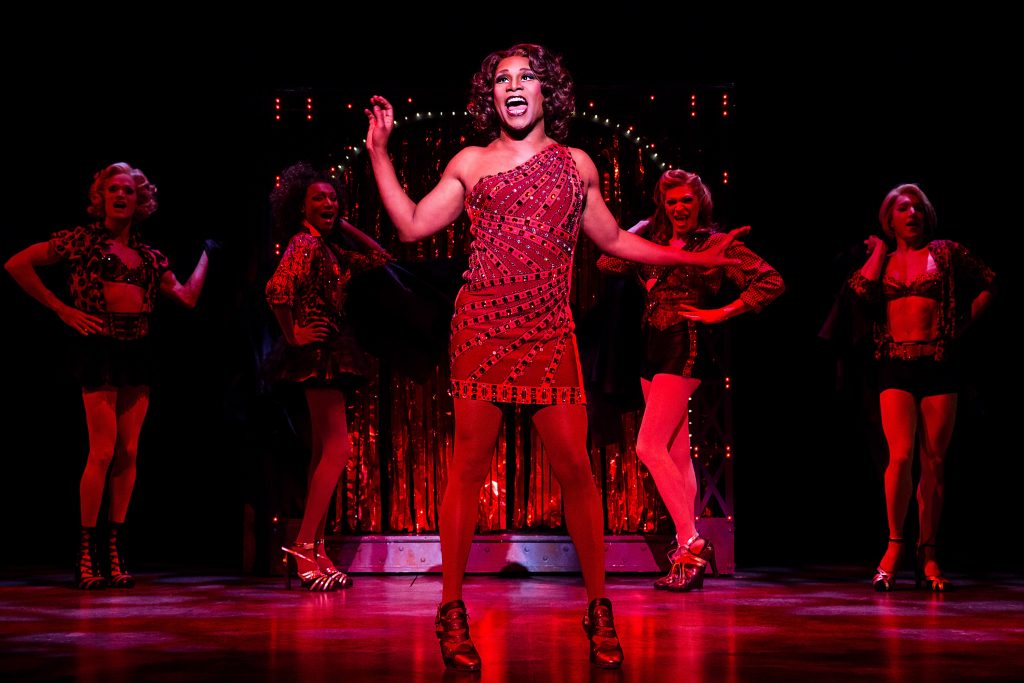
Was there a specific show or moment that felt like your “break” as a photographer?
Without a doubt my big break was when I was hired as the production photographer for “Kinky Boots” during their out-of-town tryout in Chicago. I’d met Jerry Mitchell while photographing “Broadway Bares” and then a few years later I reached out while I was in LA visiting my husband’s family to see if he wanted someone to photograph the Hollywood Bowl production of “Hairspray.” To my surprise, he said yes, and from there he mentioned wanting to try to get me on his next Broadway show. That turned out to be the future Tony-winning hit. I often think how different my life would be if Jerry hadn’t put my name in front of Daryl Roth, Hal Luftig, Aaron Lustbader and Rick Miramontez. They all took a chance on a completely unknown kid (I was 26 at the time and had no clue what the role of production photographer really entailed). It was a crash course and they really encouraged me and helped at every step of the way. Forever indebted is an understatement.
What did being a dancer teach you that most photographers don’t instinctively understand?
I could go on and on about how valuable my dance career has been to my photographic career. First and foremost I think dancers have a work ethic ingrained in them that I have taken with me throughout my life. On top of that, my technical expertise about proper dance technique allows me to really parse the difference between an image that protects the integrity of the dancers/choreographer and one that just has energy. I also think it gave me such insight into the different departments—stage management, company management, designers—that lets me communicate clearly with them.

When you’re shooting now, do you still feel like a performer in the room in some way?
I always say that when I photograph my goal is to kind of tether to the performers on the stage and essentially do a pas de deux with them. We should breath as one. Just like a good partner as a dancer, I should be able to anticipate and support the performances while analyzing space and all the design elements and making split second decisions.

THE ART OF THE PERFECT SHOT
What makes a perfect theatre photograph… is it technical, emotional, or pure luck?
To me a perfect theater photograph should make the viewer feel what it’s like to be immersed in the show. The photograph should go beyond simply documenting the design elements and performances. It should feel completely alive even though it’s still. Some shots are more successful than others at accomplishing that but it’s always the goal. You should hear the photo, not just see it.
When you’re watching a run-through, what are you actually looking for?
When I’m watching a run through I’m usually antsy about wanting to be photographing it. I’d personally always rather learn the show by shooting (and have multiple times to shoot), but if I only get one chance to photograph it I will certainly stop by and see a run through whenever possible. I’m looking for a variety of things: getting a sense of lighting, pacing, and shape of the physical space. I’m also noting if there are any elements of surprise (things that happen so quickly I might miss them if shooting the show without a first look). More than anything though I would say I’m just getting myself acquainted with the creative teams. I check in about any direction/hopes/dreams they have for the shots and make sure all the goals are aligned and expectations are managed as to what is possible.
Is the best shot usually planned… or something you steal in a split second?
I find that the best, most exciting shots are 99% of the time something that happens in a perfect split second during a run through when all of the elements align to make magic. Often that will happen and then you’ll chase that image for years to come when replacement casts come in and you try to replicate the same energy that originally happened organically.
How do you capture energy, something that’s inherently live, in a still image?
You stay really, really tapped into what’s happening at every moment. The adrenaline that goes through your body while photographing a show is akin to waiting for the starting gun of a race to go off—for 2 hours straight.
Have you ever missed “the shot”… and had to live with it?
Oh 10000000%. I’d be lying if I said no. But…as you gain more experience you get better and better at ensuring you get the shots.
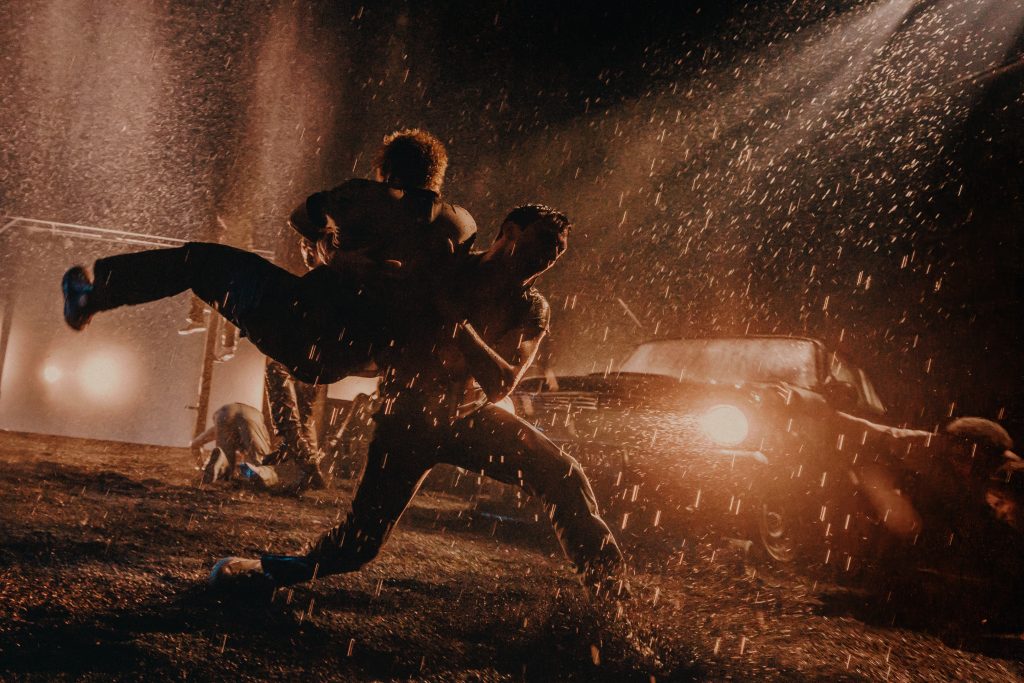
What’s a photo you’ve taken where you knew immediately, “that’s the one”?
A recent shot that I went into the shoot aiming to get was this tackle moment during the rumble in “The Outsiders.” That entire section is impossibly difficult to shoot…the lighting has extreme changes every couple of seconds so you’re constantly adjusting your settings and reacting to how the performers are situated in the space. I’d really wanted to get this shot, but even once I got it I wasn’t sure it would ever see the light of day. I knew it was exciting, but that doesn’t always mean it gets selected as an official press shot. I was thrilled when it did.

COLLABORATION / POLITICS OF THE ROOM
Who are you really working for in the room… the producers, marketing, the director, or the show itself?
The role of a production photographer is one that wears many hats. Ultimately you’re working for the producers, but you are aiming to deliver photos that please producers, press/marketing teams, the creatives of the show, and the performers. When it really comes down to it, I think if I take the approach of trying to create images that excite me, I tend to hit the mark most fully for everyone. If I go into it trying too hard to shoot in a way that is safe/pleases everyone it usually ends up having diminishing returns. You “yes and” the needs. You make sure you get what the teams think they want, and then you show them something more exciting they may not have thought of by using your expertise behind the lens.
How early do you get involved in a production… and how does that relationship evolve?
It depends production to production and has varied as the industry has evolved. My preference would be to get in the room during rehearsals at the studios to not only get acquainted with the show, but to familiarize myself with the actors and creative teams. I think that ultimately creates the most trust between photographer and subject(s) which you get a sense of in the photos, especially when setups are involved.
Have you ever had creative tension with a team about what the show should look like visually?
I wouldn’t say I’ve had tension over how the show should look, as ultimately my opinion about the design choices is above my pay grade. I’ve had opinions but usually by the point we come in it’s too late for those opinions to have anything but a negative effect. However, I have definitely run into stressful situations where a show might look one way to the eye but looks differently on camera. Or something that when in motion you don’t clock (a design element like a costume, or makeup design for instance), suddenly becomes a glaring issue in a still image. This most often happens during the first photo review for new musicals when all of a sudden the stress of putting on a $20 million show is staring the teams in the face. And suddenly they have to decide…what are the 10 images that are going to differentiate ourselves in the market and sell the show.
How do you balance telling the truth of the show versus selling the show?
I think if I let feeling be my guide I tend to be most successful. By that I mean that when you’re watching a show as an audience member your heart connects a lot of dots and forgives a lot that your eye might not when faced with cold hard facts of a photo-journalistic image. So when I’m creating an image to sell a show—especially if we are doing a setup–, sometimes I do something that I call a hybrid moment which is when you are maybe taking an element or two from one moment and putting it together with something else to make it all coalesce on camera.
What’s the best collaboration you’ve had with a director or performer?
I have been so lucky to have so many. But one that really sticks out to me is my collaboration with Alex Timbers. I’ve worked on 10 of his shows and I always feel like I’m not only trusted but encouraged to explore and create. He is so clear about what he wants (both during the shoot and during the editing process where he’s wonderfully collaborative with notes). He took a chance on me really early on with “Rocky,” which to this day is one of my favorite shows I’ve ever photographed. A big one where I felt like I really came into my photographic voice most fully was “Moulin Rouge” which was a big turning point in terms of helping to create the brand of the show from the ground up. I just never could have imagined being so lucky. I also put it together recently that the first time I ever took a photo in a Broadway theater was during tech of “Bloody Bloody Andrew Jackson” when a friend brought me in and let me snap a couple of shots from the back of the house. And I’m always incredibly excited to see what Alex comes up with next.

TOOLS OF THE TRADE
What kind of equipment is actually essential for theatre photography… and what’s overrated?
For theater photography you absolutely have some requirements in terms of gear. You need what photographers call fast glass, which is a lens that has the ability to function quickly and precisely in low light. These days, you need the ability to shoot silently on a mirrorless camera. You need fast memory cards because you’re usually shooting a lot of images in quick succession. In terms of most overrated…that’s tougher because we tend to be pretty slim in terms of gear.
How do you deal with low light, movement, and the unpredictability of live performance?
In terms of the unpredictability you have to somehow find a way to direct an image without having any control. So that leaves the one thing you have control over to be yourself. Where are you positioned? How are you micro adjusting to split second shifts in staging? Even though I’d probably look relatively calm from the outside, internally it feels like you’re doing math equations constantly.
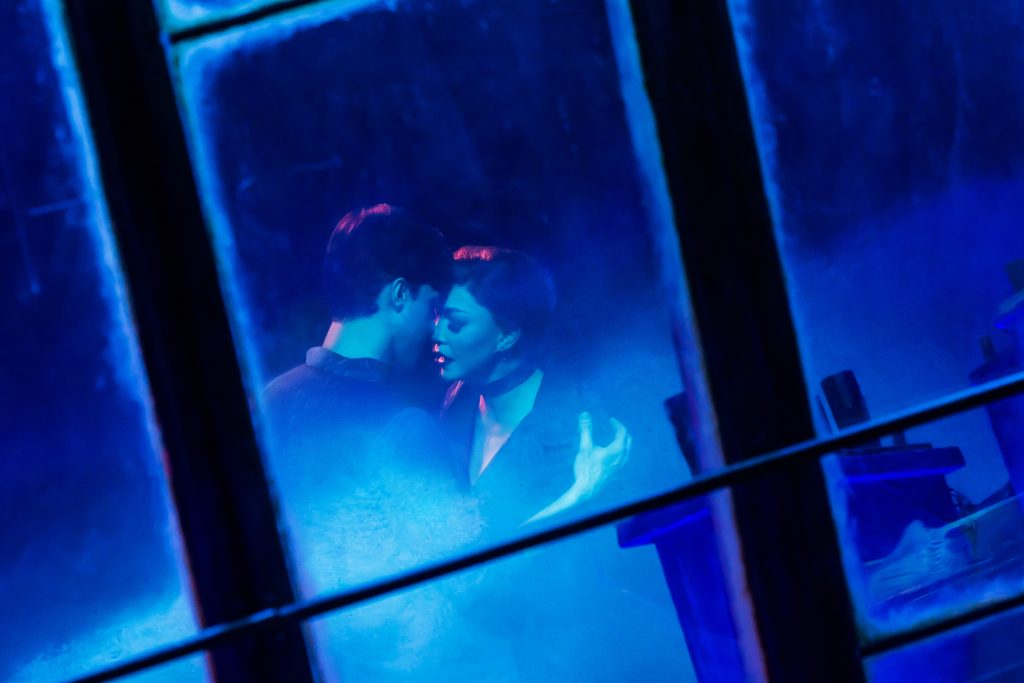
Are there shots you simply can’t get no matter how good you are?
A mantra of mine internally while I’m shooting is that there’s always a shot to be found. The one you think you might need or want could prove impossible for whatever reason, but if you keep doing the math of what’s possible there’s always a shot to be found. One recent one that comes to mind is from “Moulin Rouge” where I was shooting a put-in for the new Satine. She was in costume…most other people were not, including her Christian for a large part of the second act. One of our signature shots is from “Come What May” and I was shooting at odd angles knowing that there was no way to get the expected shot, or even the secondary or third angle shots we’ve done over the years. But I kept saying…there’s a shot here and I figured out that if I could shoot into the reflection of the window and get the angle right I could get an exciting new shot (that needed a little photoshop love to finesse some of his outfit and remove an Apple watch…shout out to our retoucher Peter James Zielinski who does the lord’s work on the production photos that Evan Zimmerman and I take). But if I’d let my brain rest knowing we couldn’t’ get the normal shot I never would have found a new exciting one.
Has technology made your job easier… or just raised the bar?
Definitely both. Mirrorless cameras are mind boggling. It’s hard to remember that for the first half of my career I was shooting on standard DSLR cameras where you couldn’t see the exposure/changes in live time through the viewfinder. You were just looking through a little window to the stage and doing actual math for exposure adjustments in real time as lighting cues shifted and you could steal a second to check on the back of the camera.
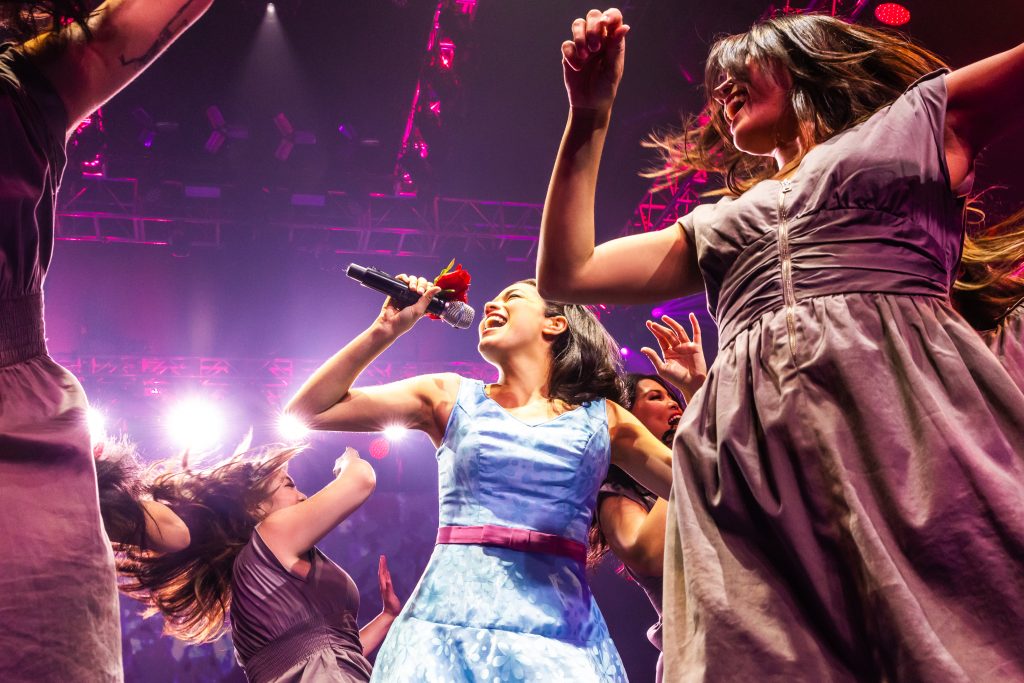
THE JOB PEOPLE DON’T SEE
What’s the biggest misconception people have about your job?
That all the best shots of a show are the ones that are released. I would say a huge learning curve for me early on was accepting that for a million different reasons (costumes changing, actors not approving a shot, a certain element being maintained as a surprise) gorgeous shots never see the light of day. A painful reality of the profession.
People think it’s glamorous… what’s the part that’s actually grueling?
The turnaround time on launches is brutal. Often we are shooting a show until 11pm, then editing an initial gallery of photos until 2am or later, waking up at 8am to check in with teams and get the approval process going for a “first look” shot, then waiting on producers, press, actors, ad agencies to weigh in, then hustling through a retouch, sending that through the proper channels for notes, and trying to get an image out the door by 2pm the day of first preview. Exhilarating and exhausting.
I’ve heard theatre photography can be physically demanding… what does a long day actually feel like?
Theater photography is a huge adrenaline rush, so when the show finally ends you feel like you’ve fun a race. Then you’ve got the physical component of holding multiple cameras for hours. I have more back, shoulder, wrist issues than I ever did when I was a dancer.
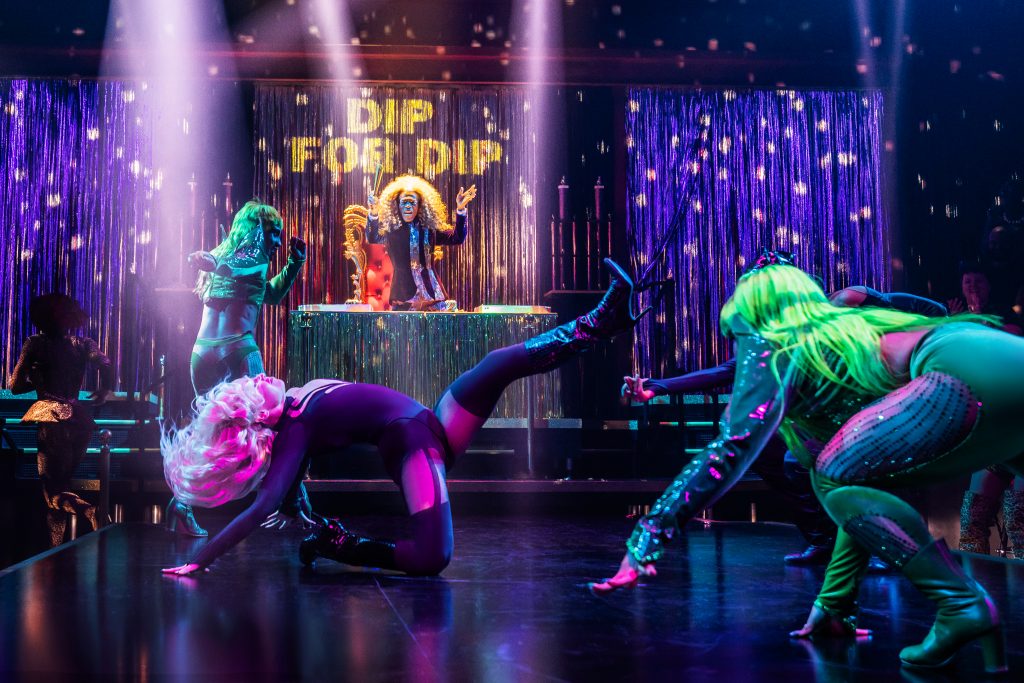
What does an “easy” day look like… and what’s a day from hell?
An easy day is when I get to be in the room during tech of a new show and all the elements are running smoothly and I’m one of a handful of people seeing a new piece of theater before the first public performance. A day from hell is when someone forgets to call spotlight operators to a musical photo call.
Have you ever had to push through exhaustion or pain to get the shot?
Absolutely. There have been times where because of how tech schedules line up you’re shooting many days back to back (or even two shows in a day) and your brain is fried. In those moments I remind myself to stay curious. And I usually have some Chipotle and a Bloom Energy Drink and keep it peppy.
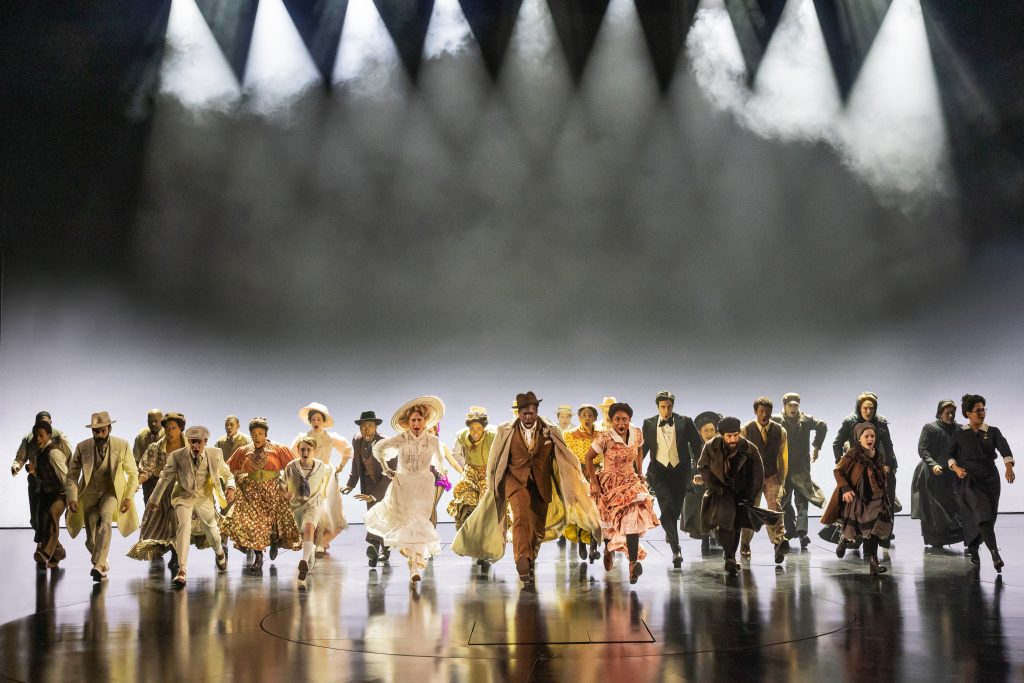
THE EYE / TASTE LEVEL
How do you develop an eye… can it be taught, or is it instinct?
I think it’s a little bit of both. I think a lot of the “eye” is instinct, but then a lot of it is learned from problem solving and building to your toolbox.
Do you think audiences today read images differently because of social media?
Absolutely. The reality is that these days most people are seeing our images on their phone and so much of the detail is lost. So things like color and movement become especially important to help the image become “thumb stopping” as you’re scrolling.
Are you ever thinking about how a shot will perform online while you’re taking it?
I would say that there are times during setup calls when I think through shooting more vertically so it fits the ratio of social media more easily. But it’s not my guiding principle.
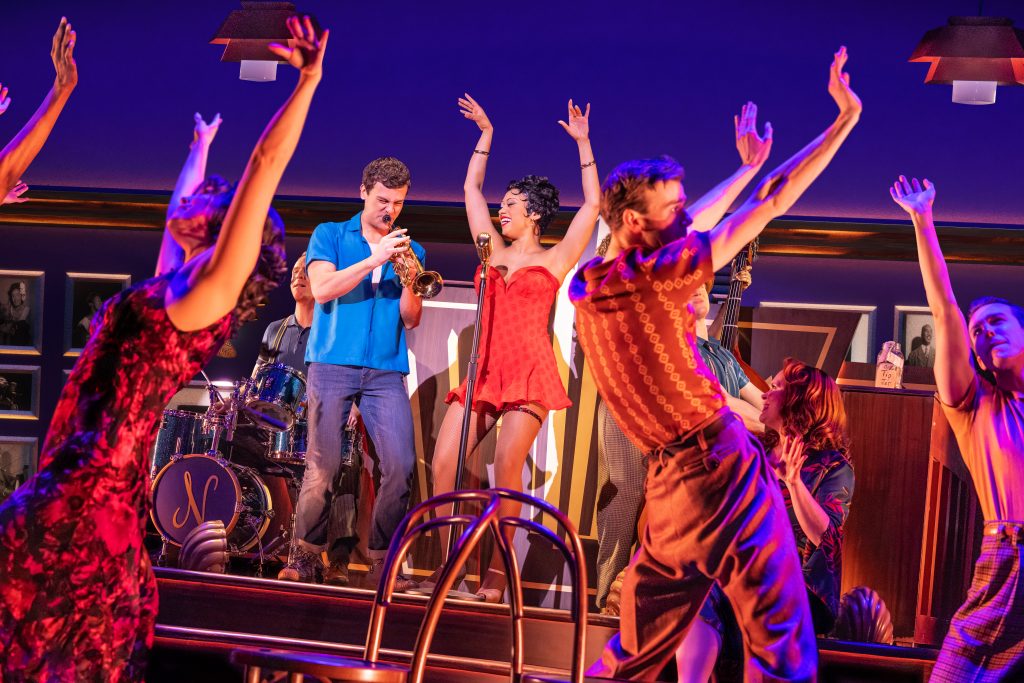
CAREER PATH / BREAKING IN
How does someone actually break into theatre photography today?
I think starting small and slowly building connections and experience. I got my start in cabarets and off-off-off Broadway productions. And honestly learning on shows that didn’t necessarily have the production value of huge mega musicals allowed me to be creative and learn how to problem solve on my feet.
What should young photographers be doing right now if they want your career?
Build that portfolio shot by shot. Analyze why a certain image works and why others don’t.
What mistakes do you see early photographers make over and over?
Airing dirty laundry/complaints online. Group texts exist for a reason.
On top of that, too often I see people reaching out just saying “tell me what to do.” Reach out to people when you are ready to have a conversation, not just siphon info. And before you reach out to people make sure you’ve looked online to see if they’ve answered your questions somewhere already.
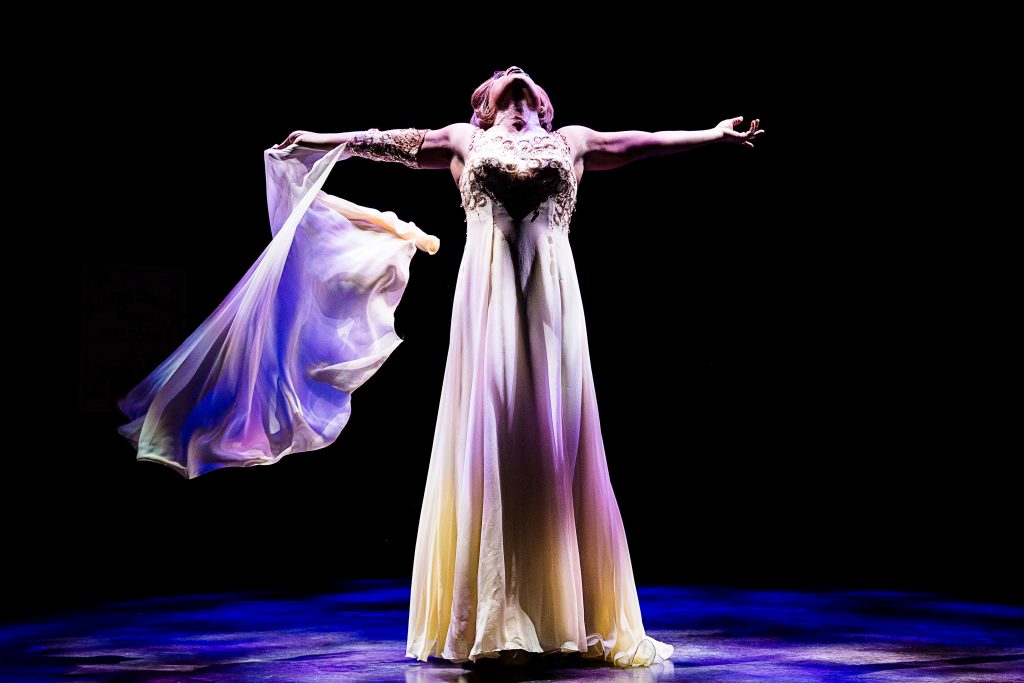
LEGACY / REFLECTION
You’ve captured so many shows… do you think about legacy at all?
I recently passed my hundredth Broadway show as production photographer and it was one of the first times I really stopped and reminisced about what the past decade has been like and what the future looks like. I don’t spend a lot of time thinking about legacy, I just keep working hard, leading with kindness and trying to get the next exciting shot.
Is there a moment you’ve photographed that you feel will outlive the production itself?
I think the beauty of production photography is that it is one of the few things that does outlive the production just by nature of a show’s life cycle. But in terms of broader picture, I think the HAMILTON logo is the first thing that comes to mind. I photographed all of the silhouettes and to see parody logos pop up in Disney movies and Legoland renderings…seeing bootleg merch is always a good reminder of how much that star logo infiltrated pop culture.
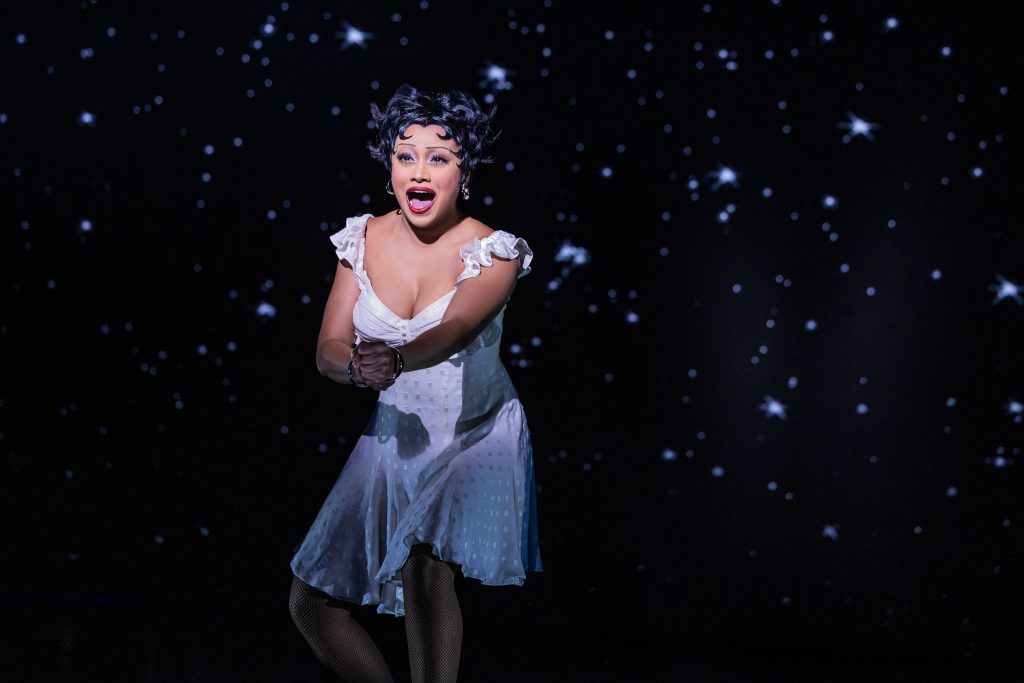
After all these years, what still excites you when you walk into a theatre with a camera?
The possibility of capturing a real star-is-born performance. I remember when my incredible associate Evan and I were in Chicago photographing BOOP! It was this instant awareness that Jasmine Amy Rogers was a true force that we were witnessing right on take off. Getting to photograph those career milestone moments for people never gets old.
And what still scares you?
I think these days I wouldn’t necessarily say I get scared. I get excited (and a little anxious) before shoots sometimes but rarely actually scared. If anything I get scared a person won’t like a photo that goes out. I always want people to look at an image of their performance and think…wow, that really captures how that moment felt when I was performing.